Audi user research
Researching Audi ownership and aftersales to redefine the online experience
Client
Audi
Duration
Dec 2016 - Feb 2017
Core Capabilities
User Research
UX Strategy
The Challenge
Audi needed help redesigning the owners area of their website to make it easier for users to find information, to drive traffic to service booking and to provide an experience more in keeping with their brand.
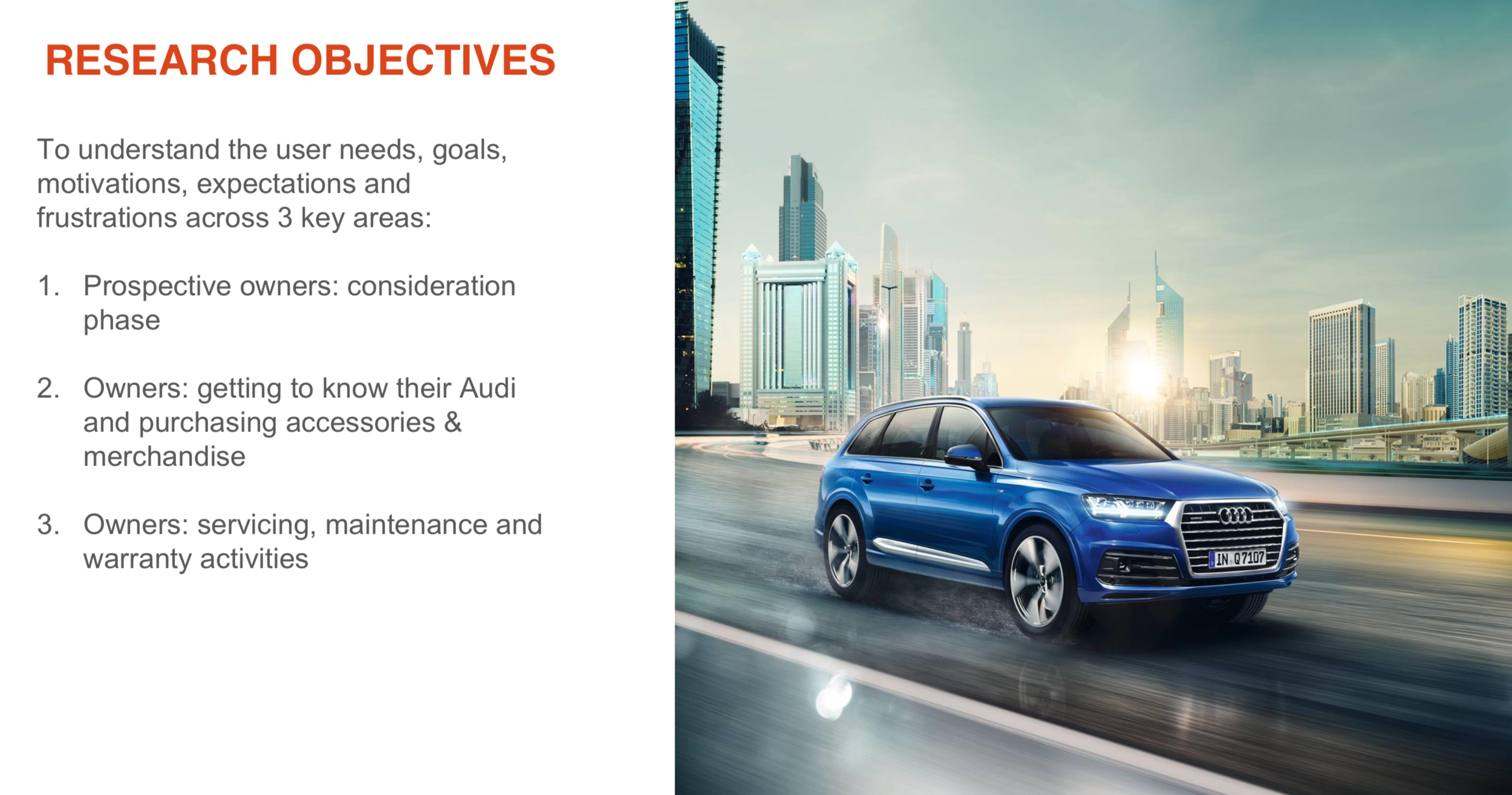
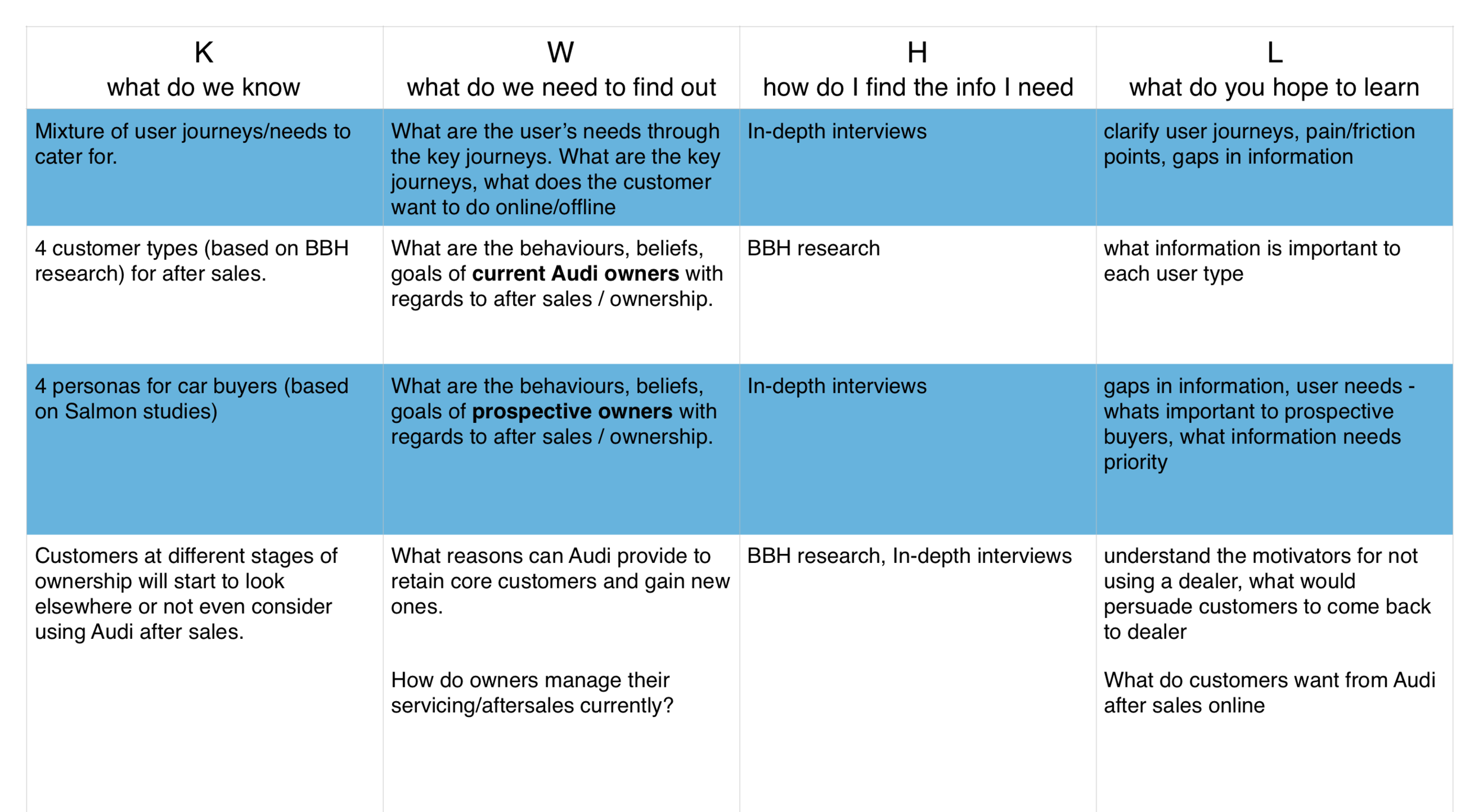
There was a gap in understanding of what their users' needs were when it came to after sales and what their motivations were to use Audi or a competitor.
The Process
1.
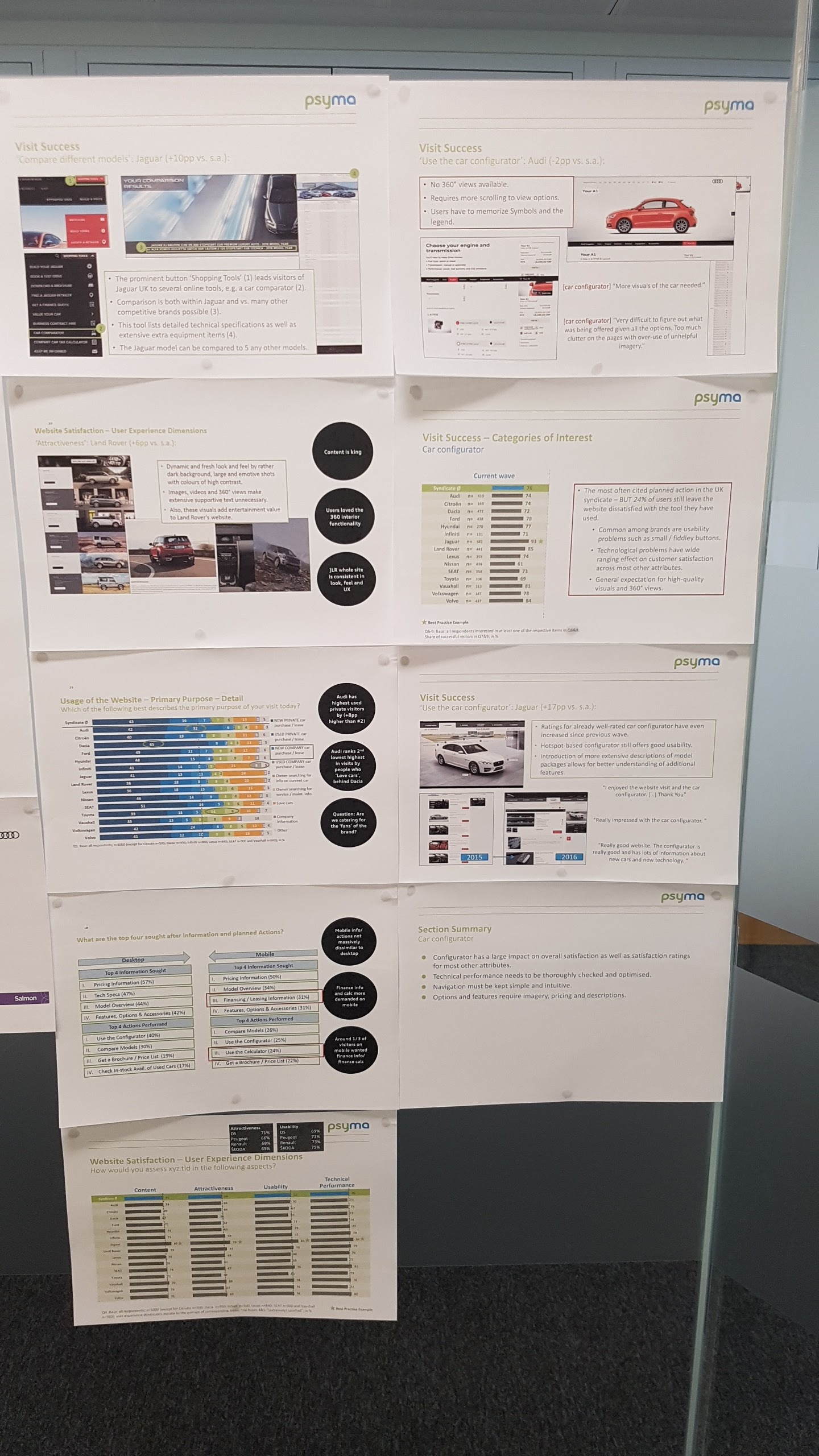
To begin with desk research was conducted to assess what information was already available about Audi’s customers. This helped identify gaps in knowledge and allowed us to better plan the interview topics. Some insight was gained from Audi's own documentation and also from further afield such as "Psyma" surveys of UK car manufacturers or the UK customer satisfaction report for the automotive industry 2016.
2.
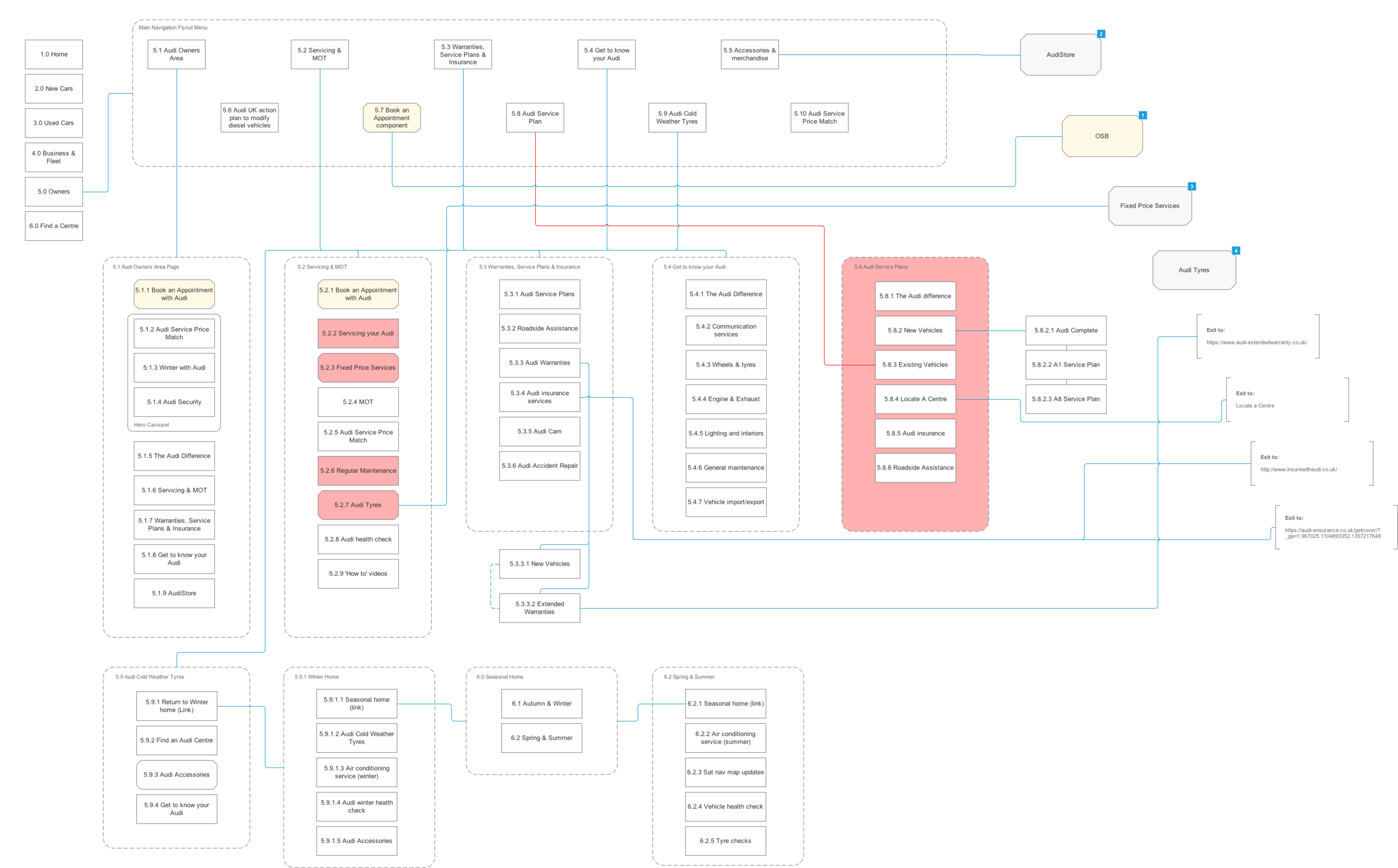
Alongside this a content audit was completed (in conjunction with our content team) where analytics data was examined to identify the most visited areas of the site, any higher than usual bounce rates, pages which have been lost from the site navigation but still receive views etc.
3.
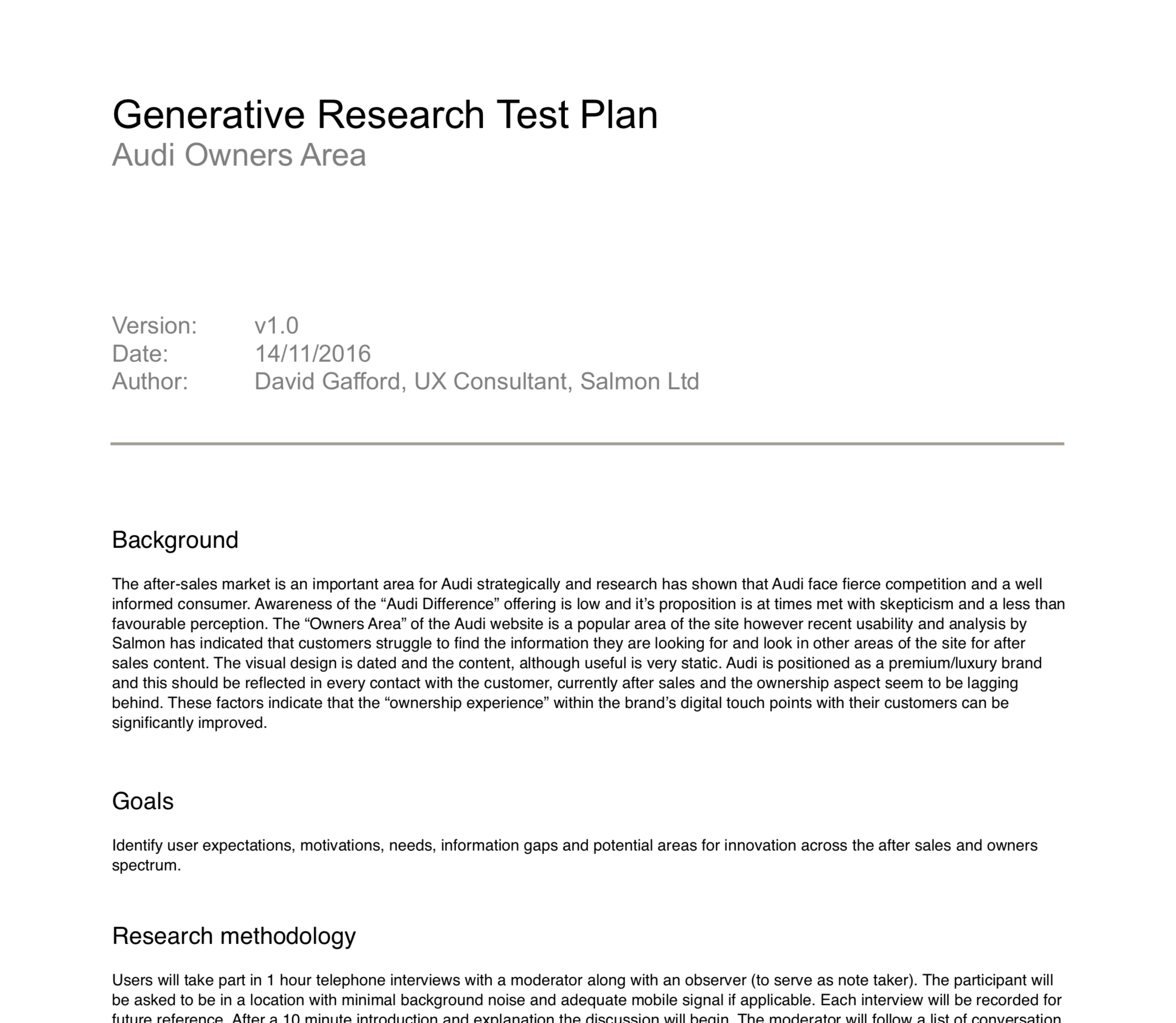
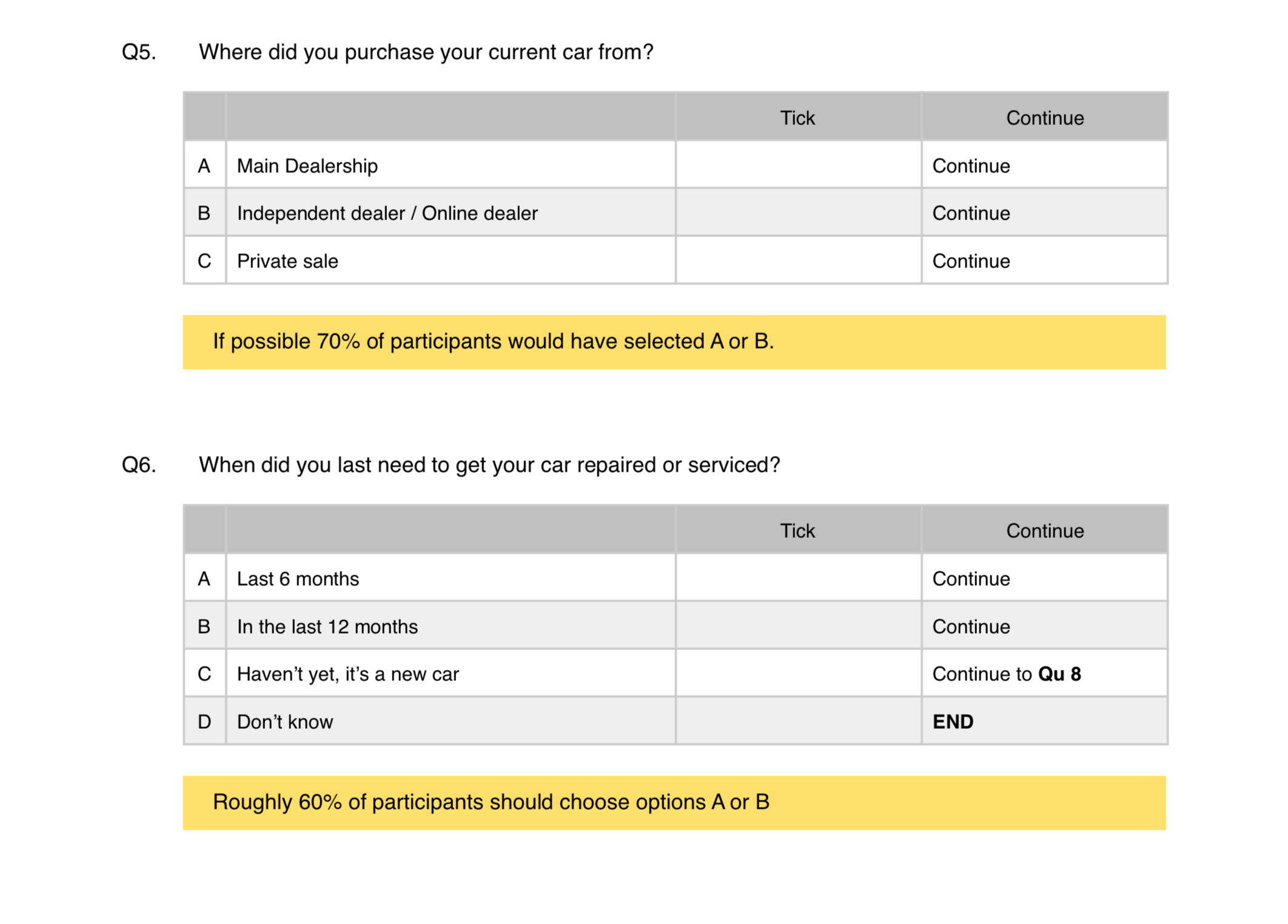
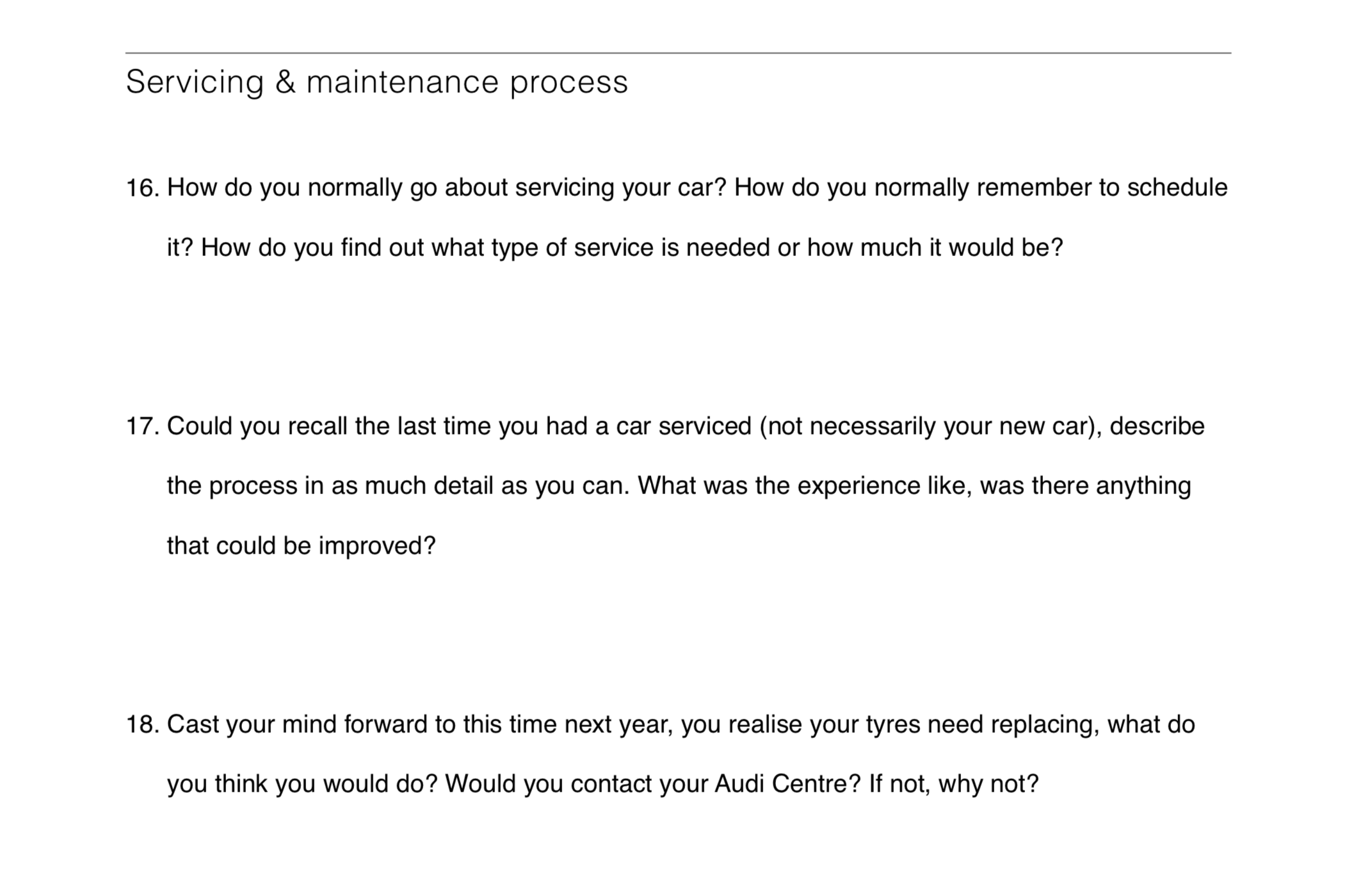
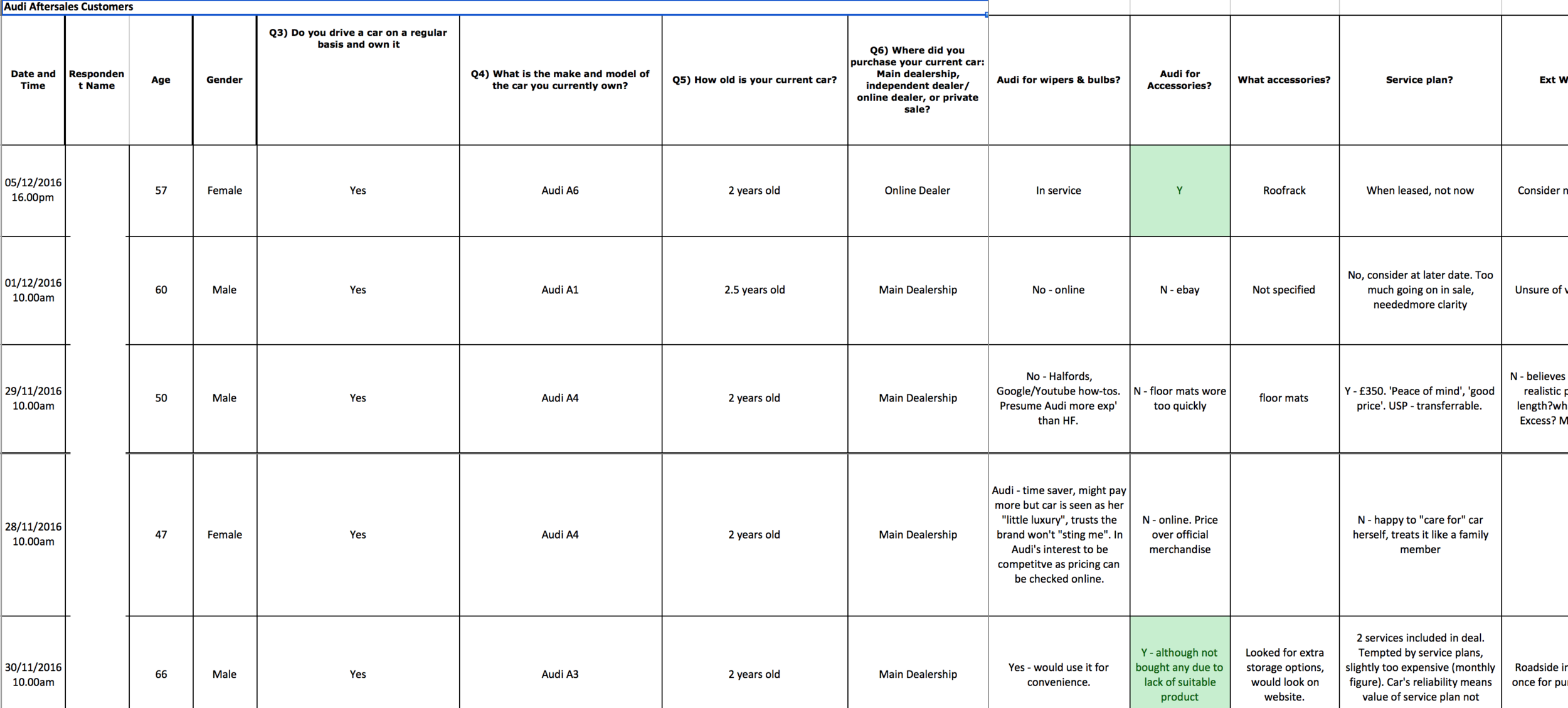
I convinced the client that interviews were needed to better understand the user needs, motivations and pain points with the current customer experience. A test plan was produced detailing to the client what the goals of the research would be, the methodologies and number of participants required. After sign off from the client recruitment was organised based on screening criteria derived from prior research Audi had into their customer segments.
Participants were interviewed from across the UK via phone, this was to enable us to get a wider range of responses than if we were to conduct face-to-face interviews in a specific part of the country.
4.
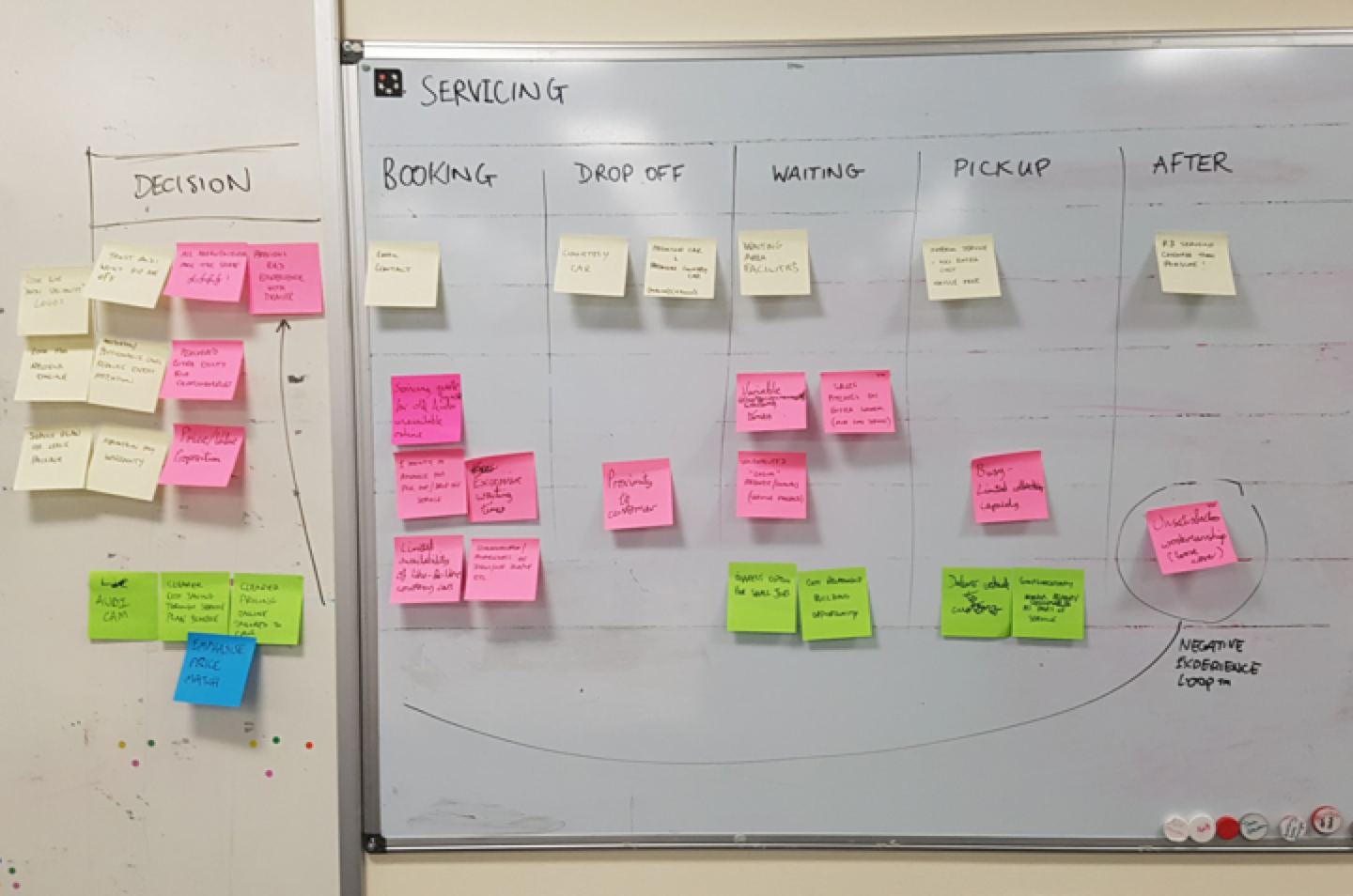
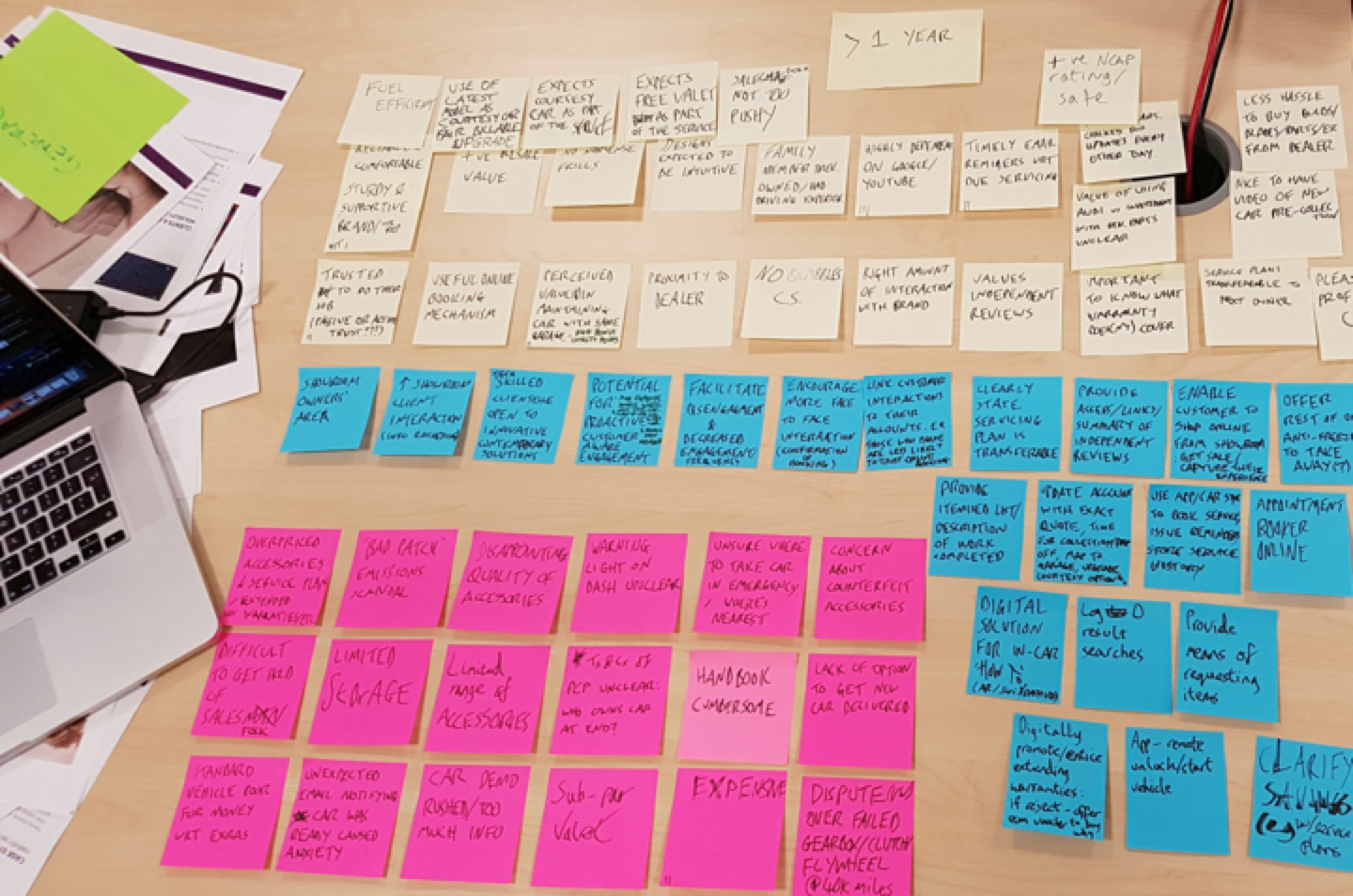
After the interviews, the data and recordings were analysed and synthesised into a report for the client. Personas, journey maps and key opportunity areas were identified to help guide the experience strategy.
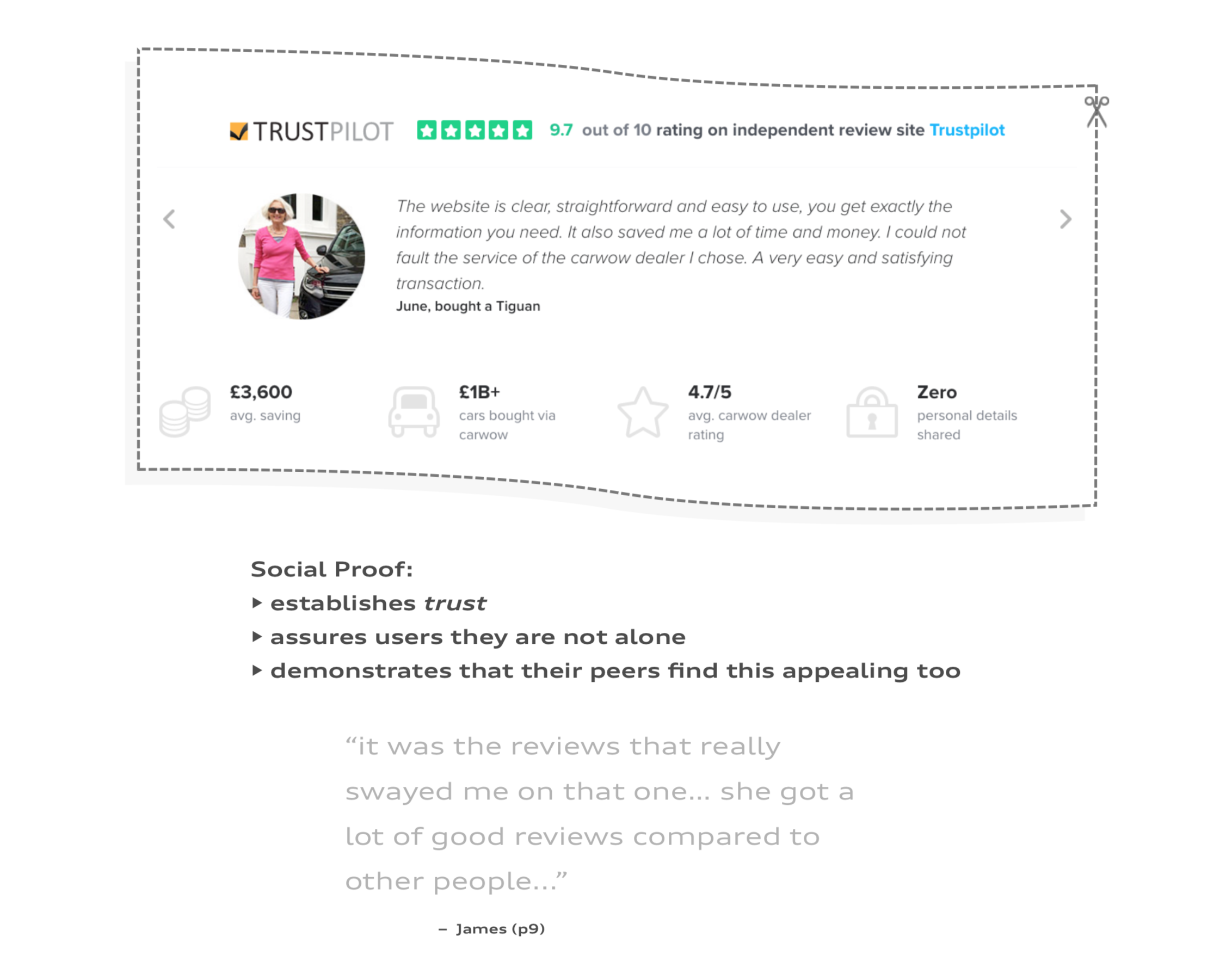
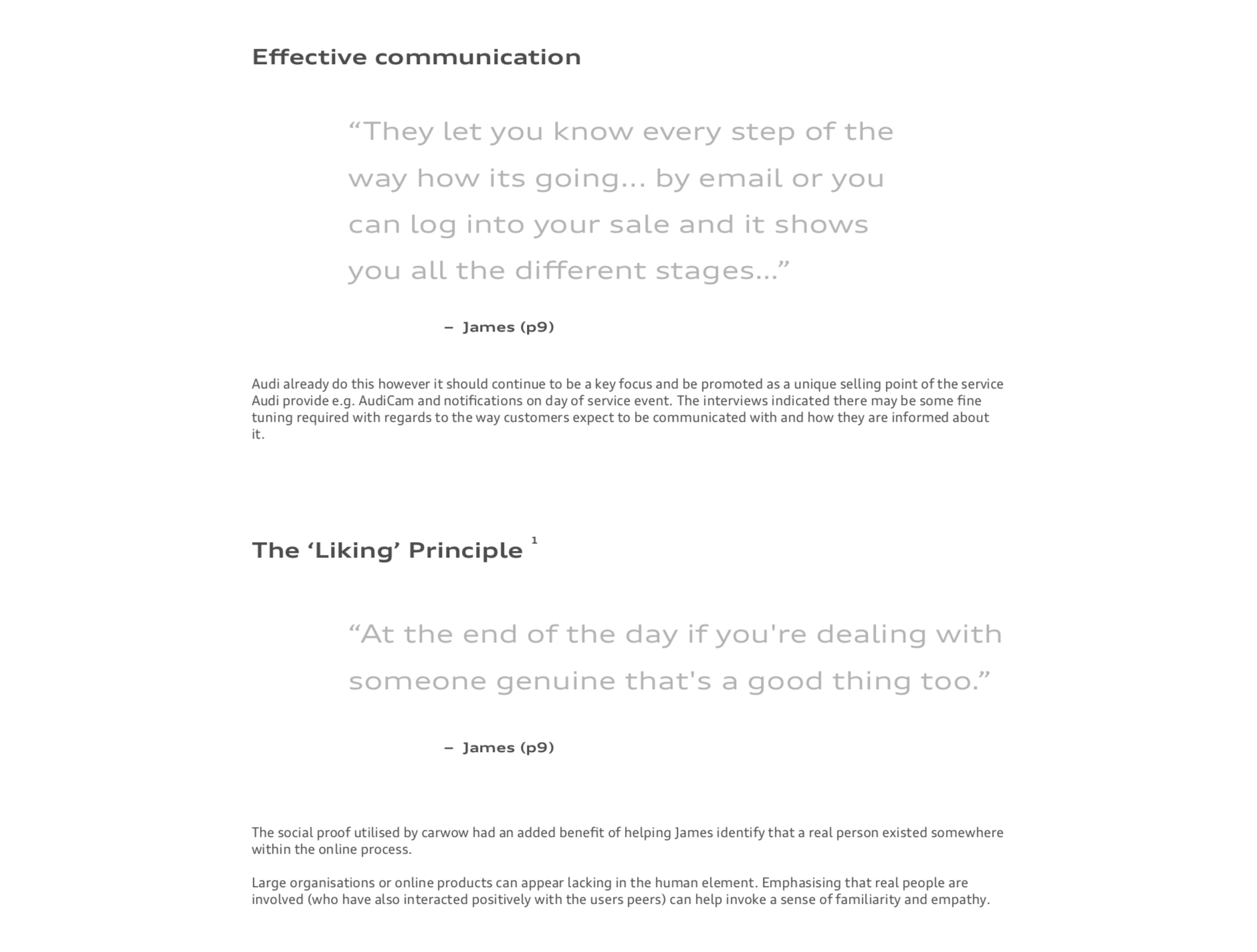
I also conducted some more strategic consultancy work based on some of the insights gained from interviewees. In particular, looking at competitor offerings that were remarked favourably on and suggesting some persuasive design patterns that could be used (social proof, likability, loss aversion and framing for example) to help convert users.
5.
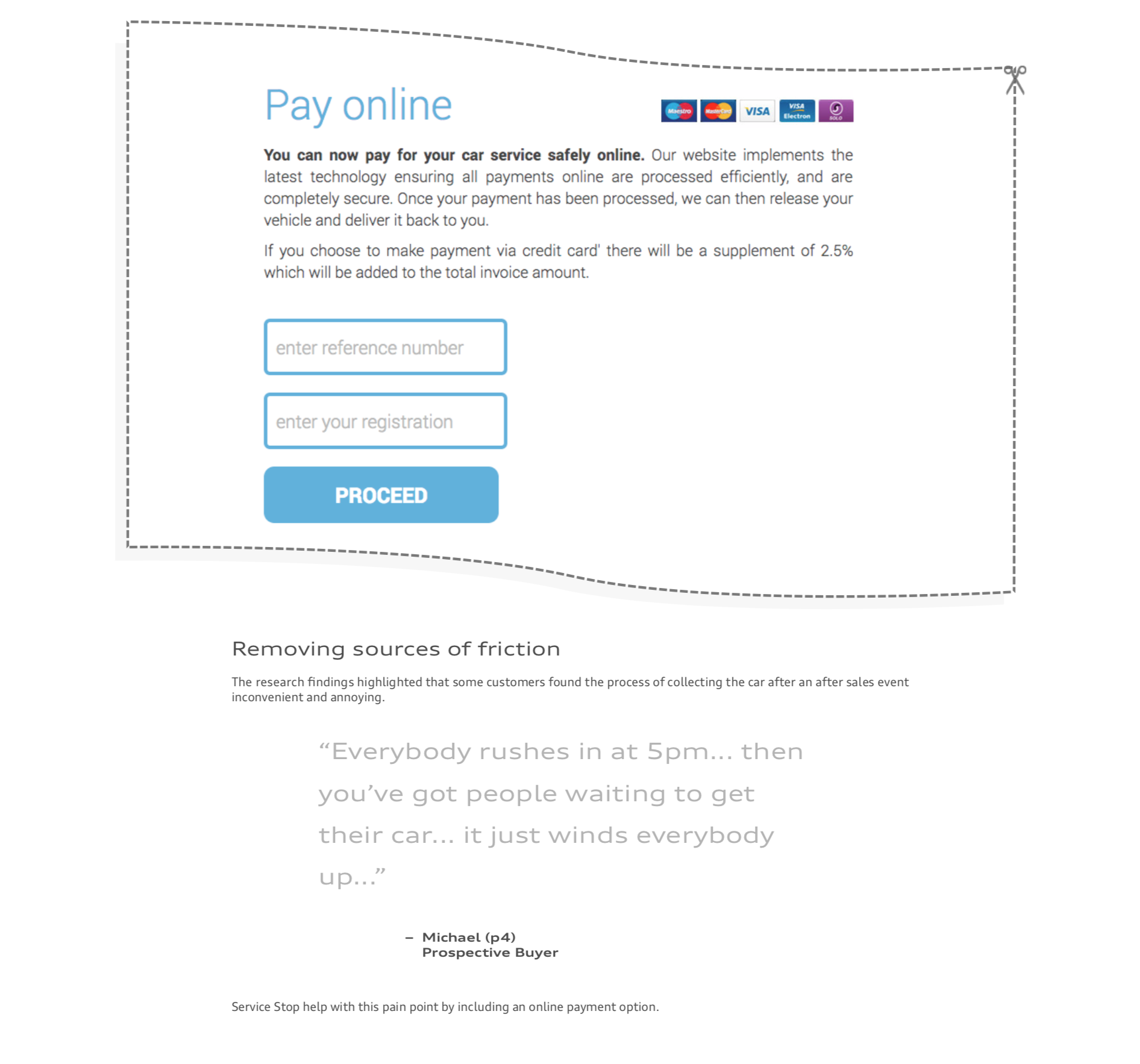
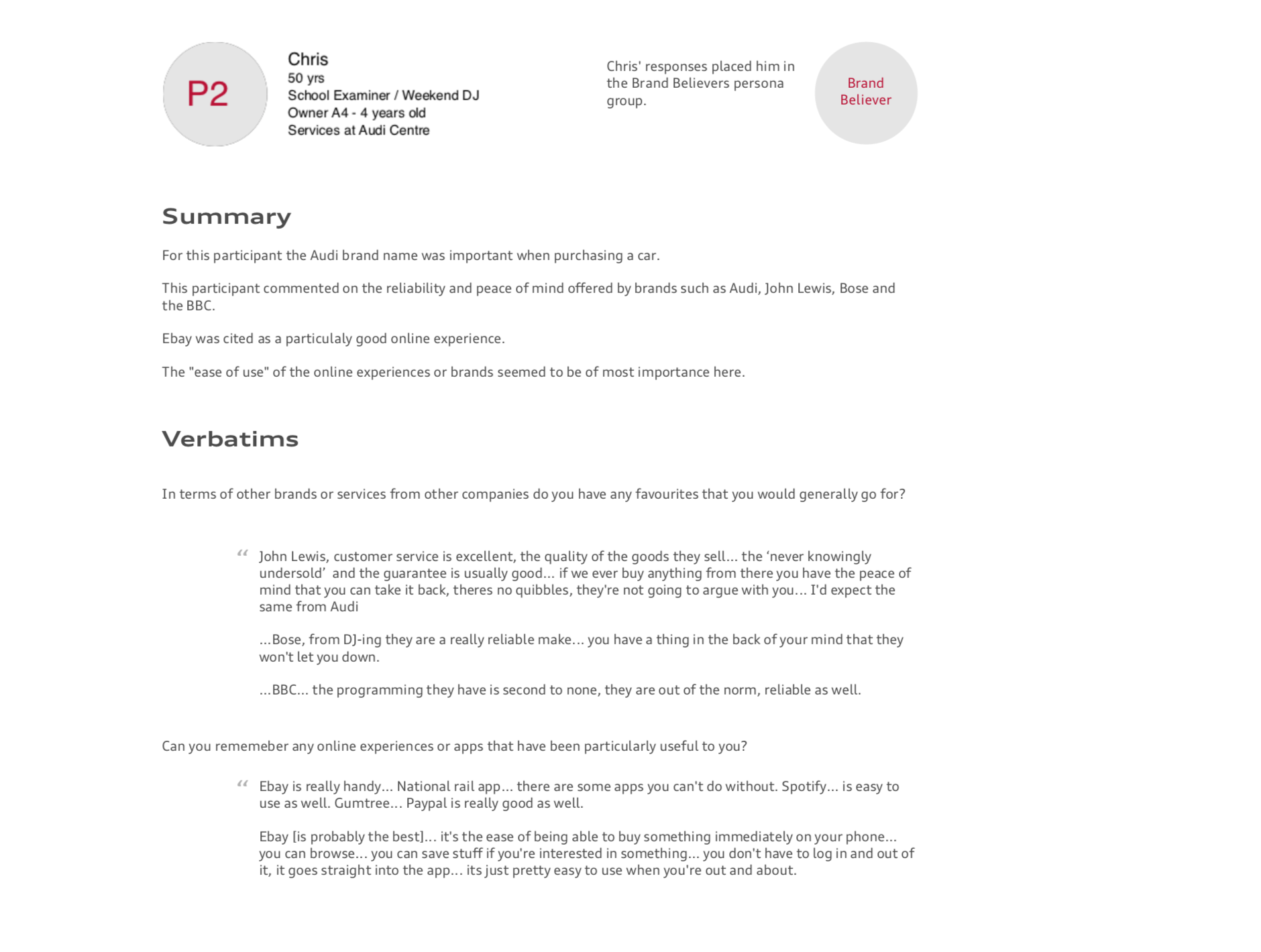
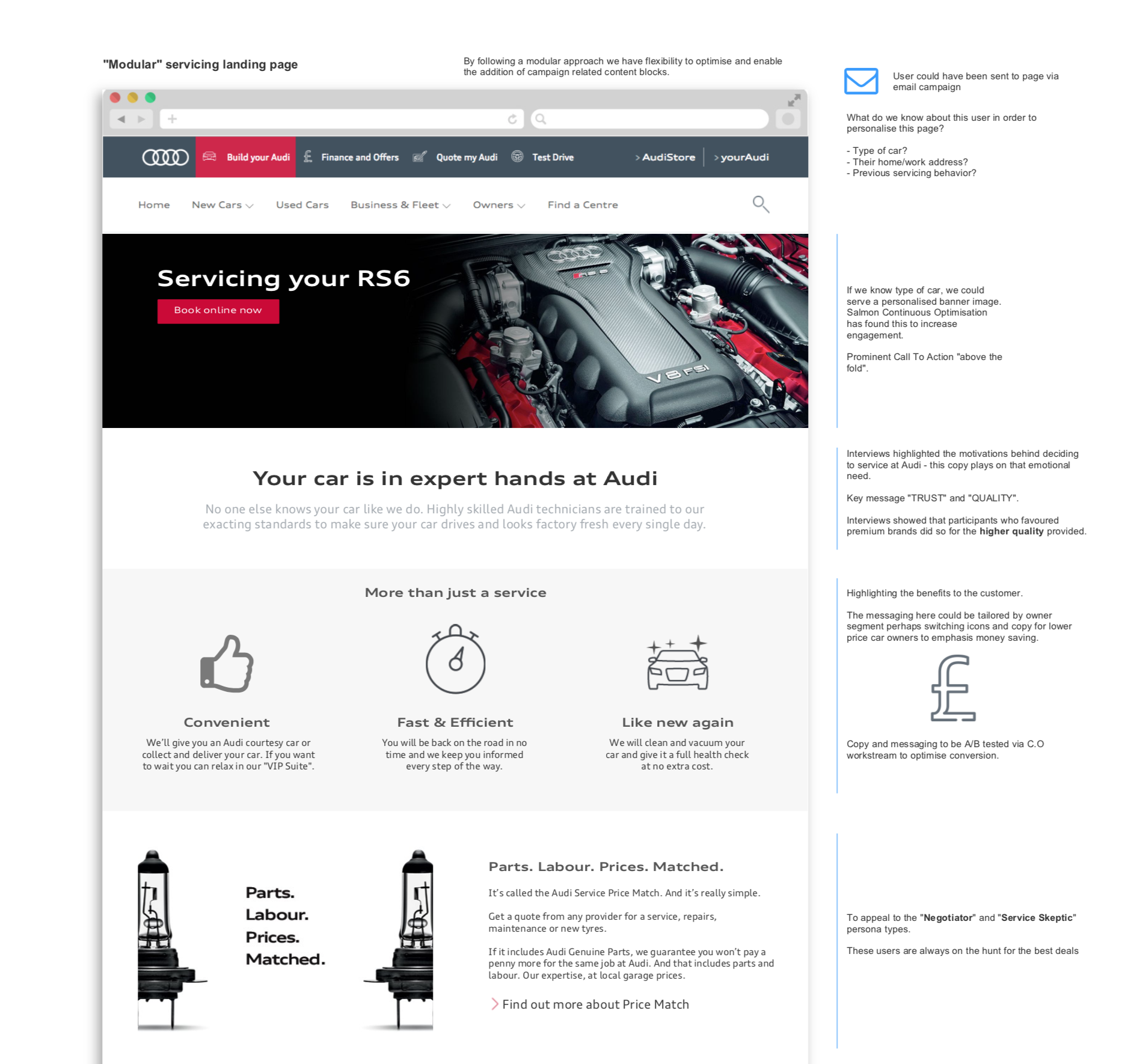
Examples from consultancy report
The Outcome
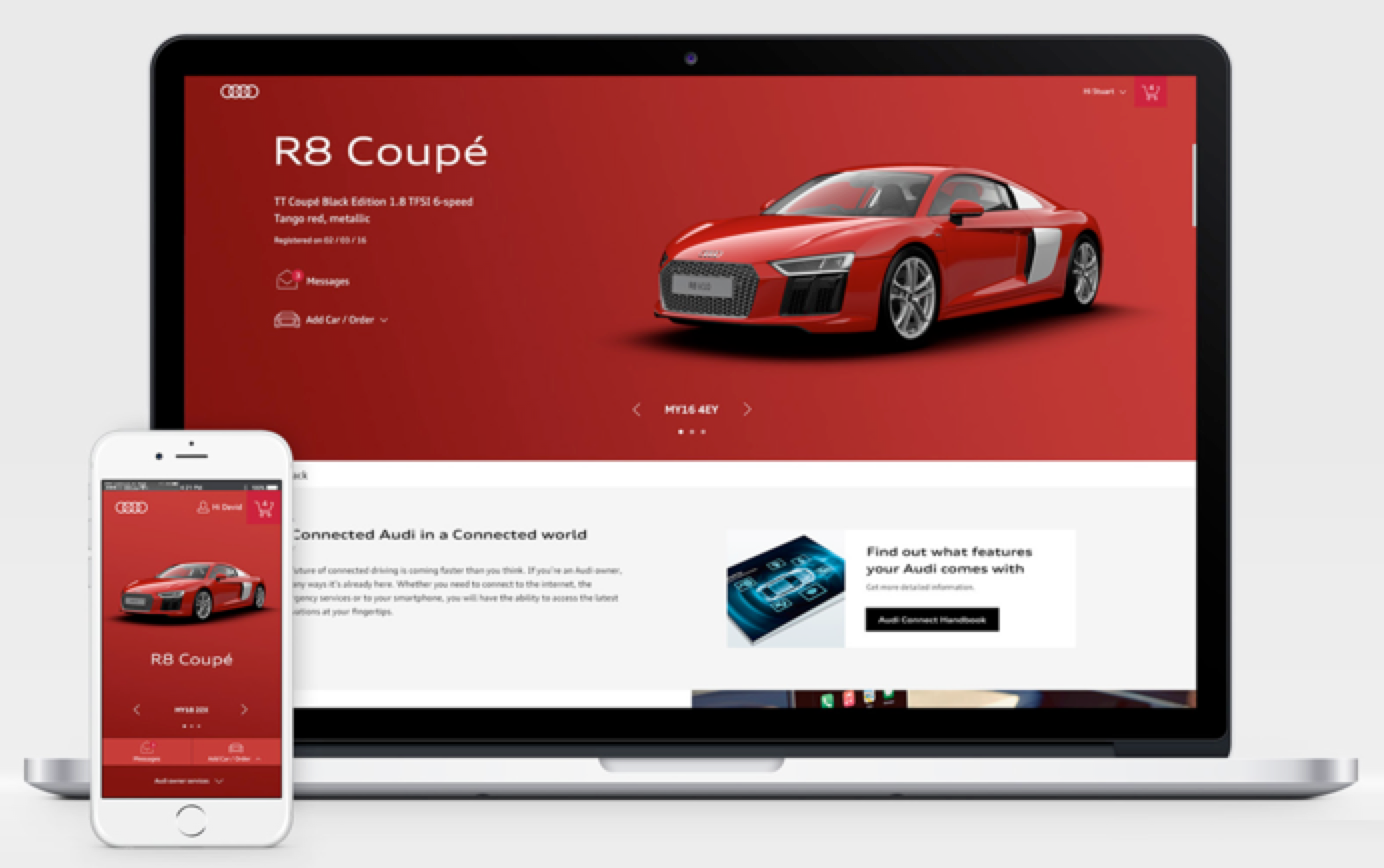
The research I provided helped Salmon and Audi design a dedicated self service portal for Audi owners to manage existing cars and track new car orders.
Service bookings via the new site after launch increased by 23%.
A 6% increase in return visits was recorded since launch along with a 55% increase in centre searches.